Letter to the independent
I concur with Yasmin Alibhai-Brown (Opinion, 8 February). If Jews in this country feel threatened by antisemitism, they should think themselves lucky they are not suffering the pogroms that another Semetic group, the Palestinians, are experiencing.
My friend Bilal is currently lying in hospital with a fractured spine and a fractured skull after being attacked on his land by ideologically driven Israeli settlers. He will get no compensation for his injuries or his lost land. The village has come under attack several times in the last months by gangs of these lawless thugs, who behave like latter-day Cossacks.
Maggie Foyer
London SW15
Wednesday, February 17, 2010


Saturday, February 13, 2010
Maan reports on the mosque demolition
Israel orders halt to construction on Nablus-area mosque
Nablus – Ma'an – The Israeli government halted construction of a mosque in the northern West Bank village of Burin south of Nablus on Tuesday, a Palestinian Authority official said.
Ghassan Daghlas, a PA official responsible for settlement activities in the northern West Bank, told Ma'an that Israeli forces presented a formal order demanding that construction on the Salman Al-Farisi mosque be halted immediately.
Construction on the mosque began a year ago, and was near completion save for the minaret, Daghlas explained, until a copy of the order was posted to contractors. The same order demanded that construction on storehouses owned by Burin resident Hisham Najjar be stopped as well.
A spokeswoman for Israel's Civil Administration did not return calls seeking comment.
Nablus – Ma'an – The Israeli government halted construction of a mosque in the northern West Bank village of Burin south of Nablus on Tuesday, a Palestinian Authority official said.
Ghassan Daghlas, a PA official responsible for settlement activities in the northern West Bank, told Ma'an that Israeli forces presented a formal order demanding that construction on the Salman Al-Farisi mosque be halted immediately.
Construction on the mosque began a year ago, and was near completion save for the minaret, Daghlas explained, until a copy of the order was posted to contractors. The same order demanded that construction on storehouses owned by Burin resident Hisham Najjar be stopped as well.
A spokeswoman for Israel's Civil Administration did not return calls seeking comment.
Protest at Burin Mosque
The new mosque in the village of Burin, Nablus District, West Bank, has been halted due to an Israeli miltary order to demolish the mosque.


Thursday, February 11, 2010
Foreign activists in OPT
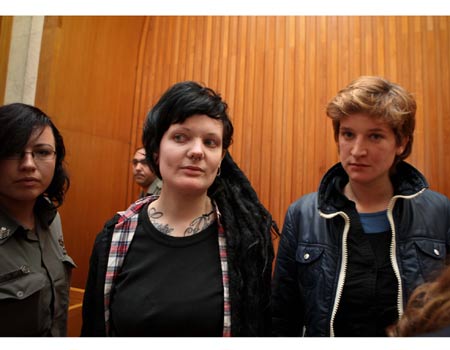
Foreign activists released from detention
High Court discussion reveals two Spanish, Australian women were detained near Ramallah in improper procedure
High Court discussion reveals two Spanish, Australian women were detained near Ramallah in improper procedure
Aviad Glickman
Published: 02.08.10, 12:31 / Israel News
The Supreme Court ordered the release of two foreign left-wing activists Ariadna Jove Marti and Bridgette Chappell in exchange for NIS 3,000 each (about $800). In addition, they were banned from the West Bank.
It was also decided that the two must submit an administrative petitions on their stay in Israel within five days. In addition, the
judges ruled that the State must issue affidavits regarding the jurisdiction of Oz unit inspectors in the territories.
The State Prosecutor's Office admitted that the arrest of the two near Ramallah on Sunday by members of the Interior Ministry's Oz unit was conducted in an improper procedure.
During a High Court discussion Monday, the State agreed to release the two women on bail, under the condition that they would be released into Israeli territories only.
The women, Ariadna Jove Marti of Spain and Bridgette Chappell of Australia, petitioned the High Court of Justice, claiming that their arrest was illegal as it was conducted in Area A, which is under full Palestinian control and not under the jurisdiction of the Israel Police.
The State's response revealed that the Israel Defense Forces handed the two women over to the Oz unit in the territories, rather than in Israel's sovereign territory, as it should have.
The State representative, Attorney Ilil Amir, said that despite the mishap, the two should be released as they were not allowed to enter the territories in the first place. After the discussion ended, the State representative reconsidered and said that the detainees could be released.
'Army persecuting people'
During the discussion, the judges criticized the arrest procedure. Judge Asher Grunis asked the State representative whether her people took any action aimed at regulating the authority issues. She replied, "It has become clear that not all elements understand all the instructions."
Judge Grunis added, "If the two women are staying in Israel illegally, you must act in accordance with Israel's entry law. Why keep them in custody? In light of the circumstances, you should consider releasing them under conditions."
Judge Uzi Vogelman asked the State representative, "If we decide to release them, are there any special conditions under which you would want to release them?"
Following a consultation between the State Prosecutor's Office and the Interior Ministry, the State representative told the judges that there would be no problem releasing the two women into Israel only and on bail of NIS 25,000 (about $6,685).
The women's lawyer, Attorney Omer Shatz, said: "We're asking ourselves why the army is motivated to arrest these two peace activists of all people. The army's motivation is to persecute people based on their political opinions. I ask the court not to lend a hand to this illegality."
According to the lawyer, Spanish Foreign Minister Miguel Moratinos has become involved in the matter, asking the Israeli ambassador in Spain not to deport Marti.
illegal arrests in the west bank
Court Frees foreign activists- west bank crack down
By Nir Hasson, Haaretz news correspondent
8/2/2010
The Supreme Court ordered two pro-Palestinian foreign activists released on bail on Monday, saying Israeli immigration officers overstepped their bounds by detaining them in the West Bank.
The activists' lawyer described their arrest as part of a campaign by Israel to choke off weekly demonstrations by Palestinians, left-wing Israelis and foreign activists against Israel's West Bank separation barrier as peace efforts remain at a stalemate.
Israeli soldiers raided the West Bank city of Ramallah on Sunday and detained Spaniard Ariadna Jove Marti and Australian Bridgette Chappell, handing them over to immigration officers overseen by Israel's Interior Ministry for possible deportation.
Both women belong to the International Solidarity Movement, which is at the forefront of anti-barrier demonstrations.
Palestinian authorities and the women's attorney called the entire operation illegal, arguing the military had no right to raid a city within an area designated by interim peace accords as being under Palestinian civil and security jurisdiction.
But the Supreme Court ordered Marti and Chappell released on other grounds, saying immigration officers - authorized only to operate inside Israel - had taken custody of the women from the military at a prison inside the West Bank.
"(The immigration officers) have no authority outside the legitimate borders of Israel," the women's lawyer, Omer Schatz, told reporters before the court ordered his clients freed on bail.
The two activists were banned by the court from returning to the West Bank but told they could file an appeal against deportation from Israel, which controls the territory's borders.
They two were ordered to pay NIS 3,000 bail apiece, instead of the NIS 25,000 originally requested, were told they could not return to the Palestinian territories, but that they could file an official appeal over their deportation.
During a hearing on Monday, state prosecutors said the two should not have been transferred to the Oz immigration unit, which has previously been instructed not to participate in the arrest of activists in the West Bank.
State Prosecutor Ilil Amir said, "A legal problem exists regarding the authority to enforce the laws of entry into Israel."
"At about 2:30 at night soldiers opened the door and came in. There were 15-20 soldiers who aimed their guns at us," Marti described on Sunday from a holding cell in Ramle prison. "They asked for our passports and then asked us to take our things and go with them. They cuffed us and drove us to Ofer Camp."
There they were handed over to the Oz immigration unit of the Defense Ministry.
They said Interior Ministry officials asked them to agree to be expelled immediately from the country.
"They told us that they are taking us to Holon and there we can decide, either we agree to immediate expulsion or that we will be jailed for six months. He told us that we had time until the trip to Holon to decide," Marti added.
The two say that at the Holon headquarters of the unit they were questioned, and that most of the questions dealt with the lack of visas.
They refused to sign documents that would see them willfully expelled.
Israel deported a leading ISM activist last month, the organization said. Eva Novakova, from the Czech Republic, had also been arrested in Ramallah.
By Nir Hasson, Haaretz news correspondent
8/2/2010
The Supreme Court ordered two pro-Palestinian foreign activists released on bail on Monday, saying Israeli immigration officers overstepped their bounds by detaining them in the West Bank.
The activists' lawyer described their arrest as part of a campaign by Israel to choke off weekly demonstrations by Palestinians, left-wing Israelis and foreign activists against Israel's West Bank separation barrier as peace efforts remain at a stalemate.
Israeli soldiers raided the West Bank city of Ramallah on Sunday and detained Spaniard Ariadna Jove Marti and Australian Bridgette Chappell, handing them over to immigration officers overseen by Israel's Interior Ministry for possible deportation.
Both women belong to the International Solidarity Movement, which is at the forefront of anti-barrier demonstrations.
Palestinian authorities and the women's attorney called the entire operation illegal, arguing the military had no right to raid a city within an area designated by interim peace accords as being under Palestinian civil and security jurisdiction.
But the Supreme Court ordered Marti and Chappell released on other grounds, saying immigration officers - authorized only to operate inside Israel - had taken custody of the women from the military at a prison inside the West Bank.
"(The immigration officers) have no authority outside the legitimate borders of Israel," the women's lawyer, Omer Schatz, told reporters before the court ordered his clients freed on bail.
The two activists were banned by the court from returning to the West Bank but told they could file an appeal against deportation from Israel, which controls the territory's borders.
They two were ordered to pay NIS 3,000 bail apiece, instead of the NIS 25,000 originally requested, were told they could not return to the Palestinian territories, but that they could file an official appeal over their deportation.
During a hearing on Monday, state prosecutors said the two should not have been transferred to the Oz immigration unit, which has previously been instructed not to participate in the arrest of activists in the West Bank.
State Prosecutor Ilil Amir said, "A legal problem exists regarding the authority to enforce the laws of entry into Israel."
"At about 2:30 at night soldiers opened the door and came in. There were 15-20 soldiers who aimed their guns at us," Marti described on Sunday from a holding cell in Ramle prison. "They asked for our passports and then asked us to take our things and go with them. They cuffed us and drove us to Ofer Camp."
There they were handed over to the Oz immigration unit of the Defense Ministry.
They said Interior Ministry officials asked them to agree to be expelled immediately from the country.
"They told us that they are taking us to Holon and there we can decide, either we agree to immediate expulsion or that we will be jailed for six months. He told us that we had time until the trip to Holon to decide," Marti added.
The two say that at the Holon headquarters of the unit they were questioned, and that most of the questions dealt with the lack of visas.
They refused to sign documents that would see them willfully expelled.
Israel deported a leading ISM activist last month, the organization said. Eva Novakova, from the Czech Republic, had also been arrested in Ramallah.
the mosque in burin
Burin residents mobilize against demolitions
Latest News, Palestinian Grassroots Anti-Apartheid Wall Campaign, January 30th, 2010
Hundreds of Palestinians participated in a crowded demonstration in Burin yesterday. The march was organized in protest of the Occupation forces� decision to demolish the Suleiman al Farsi mosque in the village, along with a group of storage structures close by. This was done on the pretext that the structures fall in Area C, with the full knowledge that the mosque is located inside the residential area of the village, close to nearby homes constructed before 1967.
The protest came after calls from the Burin Popular Committee, the Burin municipality, and the National and Islamic Forces. Hundreds held Friday prayers at the threatened mosque, where Occupation forces fired tear gas at demonstrators in an attempt to disperse them. Demonstrators responded to these attacks with stones.
With settlements to the north, east and southwest, Burin, is one of the villages in the area that suffers from continuous settler attacks.
Latest News, Palestinian Grassroots Anti-Apartheid Wall Campaign, January 30th, 2010
Hundreds of Palestinians participated in a crowded demonstration in Burin yesterday. The march was organized in protest of the Occupation forces� decision to demolish the Suleiman al Farsi mosque in the village, along with a group of storage structures close by. This was done on the pretext that the structures fall in Area C, with the full knowledge that the mosque is located inside the residential area of the village, close to nearby homes constructed before 1967.
The protest came after calls from the Burin Popular Committee, the Burin municipality, and the National and Islamic Forces. Hundreds held Friday prayers at the threatened mosque, where Occupation forces fired tear gas at demonstrators in an attempt to disperse them. Demonstrators responded to these attacks with stones.
With settlements to the north, east and southwest, Burin, is one of the villages in the area that suffers from continuous settler attacks.
Sunday, January 31, 2010


I have just received a disturbing email from Palestine. It contained a photo of my friend Bilal in hospital with a fractured spine and heavy bandaging around his head and hands. While working on his land last week, he was attacked by a gang of settlers. It is not for no reason that the Occupied Palestine Territories are called the Wild East; as settlers consider themselves above the law.
Israel continues to see itself as a Western style democracy with a respected legal system. Israel has also signed the Geneva Convention which lays a duty of care on the occupying forces to protect the civilians under their control. So why is a country with one of the world’s strongest armies unable to control these lawless thugs? Israel never ceases to remind the international community that it has a security problem; but the Palestinians living in the shadow of settlements are absolutely without protection.
In July 2007 a Jerusalem High Court ruling stated that the Israeli police and army were duty bound to protect Palestinians from settler violence. In practice this protection is nonexistent. I have witnessed a number of confrontations between settlers and farmers. If and when Israeli authorities intervene they simply order the Palestinians to leave their lands so as not to ‘inflame’ setters. Most often as in the case above, the army are nowhere to be seen and Palestinians are at the mercy of well armed and very mobile settler gangs.
This problem is on the increase. Settlers have vowed to make ‘price tag’ reprisals against Palestinians if the government attempts to dismantle outposts or settlement. As the settler population grows, more and more army and police recruits come from settlements and outposts. Advocate Talia Sasson expressed the problem succinctly. ‘Law enforcement bodies cannot act against State authorities breaking the law. They cannot handle a mixed message, that the outposts are illegal but encouraged by the authorities.'
Meanwhile my friend Bilal lies in hospital, no redress, no compensation whilst the settlers just sit back and stick two fingers up to decency and democracy.
- MF
23/01/2010
Tuesday, January 26, 2010
Freedom of speech
I protest against the restriction on journalists imposed by the Israeli Government.
Toshikuni Doi, the journalist
One year has passed since the Israeli invasion of Gaza, which left around 1,400 dead and more than 5,000 injured. Even for someone like me, who had been covering news on the ground in Palestine and in Israel since 1985, these scenes of destruction and massacre were unprecedented.
My three-week efforts to gather stories on the ground following the “end” of the attacks on Gaza resulted in my appearing on a television show on NHK (Japan Broadcasting Corporation) and publishing a booklet from Iwanami Shoten. I also exhibited my video work at World Press Photo 2009 and reported on the situation in numerous meetings and rallies in Japan. At the same time, in the spring of 2009, I showed to the Japanese public a documentary entitled “Breaking the Silence.” The film provides the firsthand accounts by former soldiers of the Israeli Defense Force of the kind of oppression that is going on in the Israeli-occupied territories.
A few months later, in late August, I made my habitual visit to the Press Bureau of the Israeli Government in Jerusalem to apply for a press card. Without the card, I cannot enter the Gaza Strip, which is occupied and sealed off by Israel. The Government, however, refused to issue a press card to me. That represents the first such refusal to me for the last twenty years or so in which I covered stories in Palestine. The Press Bureau said “The assignment letter you submitted comes from a documentary production company and not from a news organization. A press card cannot be issued for producing documentaries.”
But the fact is that they had given me a press card twice in the past for a similar assignment letter from SIGLO, the same documentary production company. The only difference at this point from the two previous occasions, however, was that it came right after the showing of my film “Breaking the Silence” and my reporting on the attacks on Gaza.
Three months later, in November 2009, I made another application for a press card, this time, with an assignment letter from a news organization. But again they refused, without giving me any reason for that.
I learned later that an Israeli newspaper, Israel National News, quoted Danny Simon, the Press Bureau Chief, in its November 30th edition, as follows:
“The Government Press Bureau Chief Danny Simon said in an interview with Arutz Sheva that Israel will not recognize anti-Semitic journalists who don’t report the truth. He stressed that there are journalists who purposely lie and serve as a fig-leaf for Hamas. “
That seems to suggest that a major reason for their denying me a press card is because I am regarded as one of those “anti-Semitic journalists who don’t report the truth.”
But I have to tell you that I have always done my utmost to be accurate about what I report as a journalist, gathering information and making sure of its accuracy on the ground. I can guarantee that I never “purposely lie” nor “serve as a fig-leaf for Hamas.” On the contrary, I make it a point to report negative aspects of the Palestinian side such as corruption in the Palestinian Authority and the strong-handed rule by Hamas. At the same time, I depicted Israelis from different perspectives. My documentary “Todokanu koe” (Unheard Voices: Palestinians, Israelis, and the Occupation) is a case in point. This tetralogy evokes the reality and the inner feelings of those Israeli citizens who lost their loved ones or had them injured due to suicide attacks. There are also those Israelis who have a sense of crisis and oppose “occupation,” believing that it would lead to the collapse of the ethical and moral values of the Israeli society. I portrayed their struggle also in my film.
The fact that my accounts of the Israeli attacks on Gaza beginning one year ago are not biased is born out by reports that followed them. They came from such sources as Amnesty International and a fact-finding mission of the United Nations and accused Israel for mounting attacks that are “serious breach of international law.”
I have always made sincere efforts to report those facts that I think need to be reported in the interest of a genuine resolution of the Israeli-Palestinian conflict and never for the sake of so-called propaganda for the Palestinians. That is because I believe that the military attacks and the occupation by Israel would not only bring pain and tragedy to the Palestinians but could also lead to the collapse of the ethical and moral values of the Israeli nation and lead eventually to the elimination of the possibility of their own security and peace. I therefore cannot possibly accept that I’m labeled as one of the “anti-Semitic journalists who don’t report the truth.”
Without a press card, I cannot enter the Gaza Strip even if I want to cover stories there. When I was a student, I stayed at a kibbutz, a collective farming community in Israel. At a suggestion by a friend, I visited a refugee camp in Gaza. That was 32 years ago. My first encounter with the Israeli-Palestinian conflict was when I was asked by one of the refugees “Do you know who used to own the land on which the kibbutz now stands?”
I began reporting the situations in Palestine and Israel as a journalist in 1985. Since then, I have visited Gaza on countless occasions to continue to gather stories there: before and during the first Intifada (Palestinian uprising), during the Gulf War, and following the Oslo Agreement, the start of the provisional Palestinian Authority, corruption of the Arafat Administration, the second Intifada, and the withdrawal of Jewish settlements. I went there during the second Lebanon War. I was also there to witness political rule by Hamas, suffering under the blockade, and the military attacks. I always tried to be on the ground to report the life under occupation and the firsthand accounts of people on the ground. In the process, you might say, Gaza made me grow as a journalist and as a person.
Israel’s refusal to grant a press card to me is now beginning to rob me of the bond I spent more than 20 years to build with people in the Palestinian communities. The desperate feeling I have now about this situation is almost indescribable.
For many years, people in the Gaza Strip have been living in a sealed off environment and under occupation. They cannot freely go out of Gaza for work, study, or even for medical treatment. The situation does not allow them to be united with members of their own family who live abroad. Of course, I cannot compare my case with the gravity of their situation, but now that I am being deprived of the freedom to visit the area, I’m becoming painfully aware of the depth of their suffering.
A close colleague of mine, who has covered the Middle East over the years, wrote to me as follows:
”There may be a need for someone like you, who is robbed of the opportunity to work on the ground but continue to work as a journalist, complaining as a stakeholder in the conflict about the illegitimacy of that kind of treatment. I think your situation is part of a larger problem than that of just a journalist deprived of chances of reporting what is happening in Gaza. That is because it’s related precisely to what the occupation is all about.”
His words awakened me to the very fact that being denied a press card and deprived of the ability to be on the ground means that I am now a “stakeholder in the Israeli-Palestine conflict” and that I have to fight the “Israeli occupation” as a journalist.
The issue does not just concern me alone. Many other journalists, who are willing to report the damages caused to the Palestinians and the true facts about Israel, may be subject to the same kind of restriction on their reporting, being labeled as “anti-Semitic journalists who don’t report the truth. “
In order for me to continue to be a journalist and to be on the ground of Palestine, I intend to use such means as press conferences, symposiums, rallies, and a petition campaign to protest against the Israeli Government’s media control and demand that the Israeli Government should respect the legitimate rights and the freedom of journalists.
I sincerely ask for your support.
On December 27, 2009,
the first anniversary of the start of the 2008 attacks on the Gaza Strip
e-mail
doitoshikuni@mail.goo.ne.jp
HP
http://www.doi-toshikuni.net/
This, however, concerns not only myself but all other journalists who are interested in reporting on Palestine. If you can agree to the following protest, please write to me at the following address. I will list your name with your occupation as someone who endorses it. doitoshikuni@mail.goo.ne.jp
Toshikuni Doi, the journalist
One year has passed since the Israeli invasion of Gaza, which left around 1,400 dead and more than 5,000 injured. Even for someone like me, who had been covering news on the ground in Palestine and in Israel since 1985, these scenes of destruction and massacre were unprecedented.
My three-week efforts to gather stories on the ground following the “end” of the attacks on Gaza resulted in my appearing on a television show on NHK (Japan Broadcasting Corporation) and publishing a booklet from Iwanami Shoten. I also exhibited my video work at World Press Photo 2009 and reported on the situation in numerous meetings and rallies in Japan. At the same time, in the spring of 2009, I showed to the Japanese public a documentary entitled “Breaking the Silence.” The film provides the firsthand accounts by former soldiers of the Israeli Defense Force of the kind of oppression that is going on in the Israeli-occupied territories.
A few months later, in late August, I made my habitual visit to the Press Bureau of the Israeli Government in Jerusalem to apply for a press card. Without the card, I cannot enter the Gaza Strip, which is occupied and sealed off by Israel. The Government, however, refused to issue a press card to me. That represents the first such refusal to me for the last twenty years or so in which I covered stories in Palestine. The Press Bureau said “The assignment letter you submitted comes from a documentary production company and not from a news organization. A press card cannot be issued for producing documentaries.”
But the fact is that they had given me a press card twice in the past for a similar assignment letter from SIGLO, the same documentary production company. The only difference at this point from the two previous occasions, however, was that it came right after the showing of my film “Breaking the Silence” and my reporting on the attacks on Gaza.
Three months later, in November 2009, I made another application for a press card, this time, with an assignment letter from a news organization. But again they refused, without giving me any reason for that.
I learned later that an Israeli newspaper, Israel National News, quoted Danny Simon, the Press Bureau Chief, in its November 30th edition, as follows:
“The Government Press Bureau Chief Danny Simon said in an interview with Arutz Sheva that Israel will not recognize anti-Semitic journalists who don’t report the truth. He stressed that there are journalists who purposely lie and serve as a fig-leaf for Hamas. “
That seems to suggest that a major reason for their denying me a press card is because I am regarded as one of those “anti-Semitic journalists who don’t report the truth.”
But I have to tell you that I have always done my utmost to be accurate about what I report as a journalist, gathering information and making sure of its accuracy on the ground. I can guarantee that I never “purposely lie” nor “serve as a fig-leaf for Hamas.” On the contrary, I make it a point to report negative aspects of the Palestinian side such as corruption in the Palestinian Authority and the strong-handed rule by Hamas. At the same time, I depicted Israelis from different perspectives. My documentary “Todokanu koe” (Unheard Voices: Palestinians, Israelis, and the Occupation) is a case in point. This tetralogy evokes the reality and the inner feelings of those Israeli citizens who lost their loved ones or had them injured due to suicide attacks. There are also those Israelis who have a sense of crisis and oppose “occupation,” believing that it would lead to the collapse of the ethical and moral values of the Israeli society. I portrayed their struggle also in my film.
The fact that my accounts of the Israeli attacks on Gaza beginning one year ago are not biased is born out by reports that followed them. They came from such sources as Amnesty International and a fact-finding mission of the United Nations and accused Israel for mounting attacks that are “serious breach of international law.”
I have always made sincere efforts to report those facts that I think need to be reported in the interest of a genuine resolution of the Israeli-Palestinian conflict and never for the sake of so-called propaganda for the Palestinians. That is because I believe that the military attacks and the occupation by Israel would not only bring pain and tragedy to the Palestinians but could also lead to the collapse of the ethical and moral values of the Israeli nation and lead eventually to the elimination of the possibility of their own security and peace. I therefore cannot possibly accept that I’m labeled as one of the “anti-Semitic journalists who don’t report the truth.”
Without a press card, I cannot enter the Gaza Strip even if I want to cover stories there. When I was a student, I stayed at a kibbutz, a collective farming community in Israel. At a suggestion by a friend, I visited a refugee camp in Gaza. That was 32 years ago. My first encounter with the Israeli-Palestinian conflict was when I was asked by one of the refugees “Do you know who used to own the land on which the kibbutz now stands?”
I began reporting the situations in Palestine and Israel as a journalist in 1985. Since then, I have visited Gaza on countless occasions to continue to gather stories there: before and during the first Intifada (Palestinian uprising), during the Gulf War, and following the Oslo Agreement, the start of the provisional Palestinian Authority, corruption of the Arafat Administration, the second Intifada, and the withdrawal of Jewish settlements. I went there during the second Lebanon War. I was also there to witness political rule by Hamas, suffering under the blockade, and the military attacks. I always tried to be on the ground to report the life under occupation and the firsthand accounts of people on the ground. In the process, you might say, Gaza made me grow as a journalist and as a person.
Israel’s refusal to grant a press card to me is now beginning to rob me of the bond I spent more than 20 years to build with people in the Palestinian communities. The desperate feeling I have now about this situation is almost indescribable.
For many years, people in the Gaza Strip have been living in a sealed off environment and under occupation. They cannot freely go out of Gaza for work, study, or even for medical treatment. The situation does not allow them to be united with members of their own family who live abroad. Of course, I cannot compare my case with the gravity of their situation, but now that I am being deprived of the freedom to visit the area, I’m becoming painfully aware of the depth of their suffering.
A close colleague of mine, who has covered the Middle East over the years, wrote to me as follows:
”There may be a need for someone like you, who is robbed of the opportunity to work on the ground but continue to work as a journalist, complaining as a stakeholder in the conflict about the illegitimacy of that kind of treatment. I think your situation is part of a larger problem than that of just a journalist deprived of chances of reporting what is happening in Gaza. That is because it’s related precisely to what the occupation is all about.”
His words awakened me to the very fact that being denied a press card and deprived of the ability to be on the ground means that I am now a “stakeholder in the Israeli-Palestine conflict” and that I have to fight the “Israeli occupation” as a journalist.
The issue does not just concern me alone. Many other journalists, who are willing to report the damages caused to the Palestinians and the true facts about Israel, may be subject to the same kind of restriction on their reporting, being labeled as “anti-Semitic journalists who don’t report the truth. “
In order for me to continue to be a journalist and to be on the ground of Palestine, I intend to use such means as press conferences, symposiums, rallies, and a petition campaign to protest against the Israeli Government’s media control and demand that the Israeli Government should respect the legitimate rights and the freedom of journalists.
I sincerely ask for your support.
On December 27, 2009,
the first anniversary of the start of the 2008 attacks on the Gaza Strip
doitoshikuni@mail.goo.ne.jp
HP
http://www.doi-toshikuni.net/
This, however, concerns not only myself but all other journalists who are interested in reporting on Palestine. If you can agree to the following protest, please write to me at the following address. I will list your name with your occupation as someone who endorses it. doitoshikuni@mail.goo.ne.jp
Wednesday, January 20, 2010
Jared Malsin
American journalist Jared Malsin has been expelled by Israel due to his pro-Palestinian stance.
This will have strong ramifications for those supporting freedom of the media.
Especially in Israel.
read more about it:
Al-Jazeera
Ma'an News
This will have strong ramifications for those supporting freedom of the media.
Especially in Israel.
read more about it:
Al-Jazeera
Ma'an News
Friday, January 8, 2010
Statement from the Palestinian Progressive Youth Union
A report: fresh from Arabic translation (apologies if it takes a while to understand!)
Burin .... And brutal settlement of the land do not know to give
Report: _ Palestinian Progressive Youth Union 2009
Seemed obvious from the dust and not through statements made by Prime Minister Benjamin Netanyahu, the Israeli occupation on a partial freeze on settlements in the West Bank and the exclusion of occupied Jerusalem over the major focus of his Government to this city, but more obvious is that the occupation is no difference between the land of Jerusalem, Nablus, other surface or between a Palestinian town or village, all of this settlement, which became the target of no later eating endless acres of the legitimacy of any international or United Nations or any international laws have become obsolete in their eyes.
Attacks and practices become open for each small and large, clear Kodouh dominance of the occupier on the land do not know Scotta Rkuaa no surrender, no, not that the earth was united color of its soil or the unity of its people and severity of attacks were by the occupier to become equal space and sweeping confiscation and military posts and settlements.
Justice FDC
Burin, a Palestinian village located about ten kilometers south of Kailua town of Nablus distinguishes itself from the rest of the universe surrounding villages, have a beautiful and quiet countryside, but wounded Palestine extended for decades and that has not drained yet distorted the village to the other is giving it a further advantage of the settlements that surrounded the four points of the ground
Where he occupied Israeli territory from the south, the settlement known as (Yizhar) erected on the place of Salman the Persian great companion on the summit of Mount Salman As is known, contains the settlement are the most extreme settlers in the West Bank, they are relieved of their duties day and night and Itvennon exercise all types of attacks against the population of this village is the confiscation of land to cut the olive trees and burning of crops to the naked aggression on the homes of parents, especially on houses close to the settlements or bypass road between the houses and the home of Mr. Abu Marwan Najjar, Abu al-Najjar and the home of Bassam Abu Ayman Atallah,
"Um Ayman Atallah for as long as we are not attacked settlers fierce and frightening, especially the night times Black On one occasion they burning the house until they are, arriving to the room where they barricaded themselves, and became Iserpoa gasoline from the bottom of the door, but we have to face the water pouring gasoline and saved from the fire, which almost hungering for. And follow up Umm Ayman and that on one occasion stole 10 of the headers as well as livestock to the top of the horses we Nest in the land of the house.
More than either compound the problem according to Umm Ayman is after her home and unfortunately the village and this is what make people linger in the village to reach the house in case of any attack and so we had to say Atallah to fortify the house walls and metal wires into our house like a prison torturers are just a small riffraff engage us what no eye has seen no ear has heard no danger to the minds of human beings.
Right click the accuracy of
Imran Akram says Sun Ahturna farmers in the village with the settlers, (above what attacked on our soil, attack us, I mean right click) and that tells Imran that during the olive harvest in the past year when we were picking the fruit of the olive on a bypass road (the main settlement), we transferred by animals from the top of the mountain to the village outskirts in order to win time and in one instance, settlers stole olives which we put them on the edge of the road and when we got to bring the second pregnancy.
Are the methods and arts of settlers that does not end with the understanding that they create on the Palestinians to learn from new methods to attack by the villagers and towards this need or Bassam says her one of the houses near the entrance to the settlement of Yizhar the settlers attacked the house when they beat the stones from within (and Alnagafp Almkulaiap) These are tools used by Palestinians in their confrontation with Israeli soldiers, and Troy or Bassam Moreover, they utter strange terminology we have not heard a strange parallel, and adds that most of the settlers who attack homes are primarily religious and wearing strange uniforms and as interpreted by her son, one of the claims of settlers, which means ( Arab pigs Leave our land).
Her Highness blessing and a curse, but ........
After they built a settlement in the south had to be justice in the balance of the settlement in order not to tilt toward the other of this took place north of the village settlement known as (Bracha), which means the pool and extend the settlement of the north of the village to the west along the more than 200 m and this is gobble up dozens of acres of the village.
They contain the settlement on the settlers are not the best from the settlement of Yizhar they all occupied one Icbakoa among themselves which one will damage and harm the people of the village, if we compare between them and the settlers Esthar as Nael Abu-Zabin owner of one of the affected territories, the settlers of Yitzhar and Bracha have to fight the olive tree is the first three methods cut the whole tree while the other method is the burning of the tree, but he says Nael Abu when they found out that the trees shoots that grow from a new rejects all such practices, which have endless third deadly manner, thereby eliminating the olive tree remains fully and any hope of growth of namely the elaboration of a new pesticide that does not preclude the tree to the color yellow, but also dissolving them in order, keeping only the remnants of small twigs says faintly sad that this place was a tree.
Nael Abu stresses in spite of all these practices, the villagers will not give in to the settlers and burned a single tree instead Snzera tens of trees Snroyha of blood and the blood of our sons and our succeeding generations.
East and West ..... Beatings and death
Was not expected after all the greed and the greed of the occupier on both sides of North and South to leave the East and West without the arrogance that used by Good Earth, where he was for both the East and West to command their share of the settlement that justice corrupt each other equally.
Middle Vtlal in Burin octopus has become the large number of excavated streets, let alone the point where the military above all this, where you prevent people from accessing their lands near the settlements on the one hand the other hand, guarding the settlers who attack the village and herders who wander Bognamanm to pasture near the village.
On this holiday, "says Walid (Abu-Musa), one of the shepherds Buren was the most villages in the area to land area owned by the occupier that the confiscation and razing hundreds of acres and adds Abu-Musa we can not stay away from the village, only 300 meters Bognamna fear of the wolf that preys on and Siftersna sheep after devour our land and Abu-Musa tells one of the experiments with the history of the settlers where they attacked him in the month of Ramadan and killed him 5 of the rat after they shot him, forcing him to take refuge in Bognamh to which he owes his life and they also kill the donkey, who had covered his head with a knife and this Do not expect to be Abu-Musa, had told us the story of Laila and the Wolf, but we cut the story of Buren, and the wolf.
And not the west side is better than the East soon to look at the western side of the time of sunset did not expect that Tekhal your eyes see the sun set, but you will see the lights of the camp, which may have occupied the lights the sun as well.
Unless account
Thus the people of the village of Burin had grown accustomed to all those practices of the settlers right Just say the town for as long as the settlers had to burn the whole village and the mountains especially in the summer and even subjected to many farmers in the beating and the olive harvest and this all comes with the support of soldiers , but not in mind that the settlers be able to launch homemade rockets and the transfer of the Palestinian experience in Gaza to West Bank settlers Jews.
On this Talking Najjar, owner of one of the rockets damaged houses say, when we were the first of this kind and to hear the explosion, we thought that the voice output by a bomb delivered by one of the soldiers we lived next to a military post, but when I came out of the house did not believe what I saw, I saw a settler launch its missile second again, but fortunately that his rocket is not a long-term is not up to long distances, and adds that the carpenter did not fear the days and rest the belief that the settlers to be developing missiles capable of reaching farther warheads and explosive materials is greater.
Buren to the demise !!!!!!
This statement uttered by an officer of the army did not Mursi Abu Walid Said one of the shepherds in the village when he was grazing in a mountain stage near the Jewish settlement of Bracha, "says Abu-Musa said the officer told me" I do not expect to stay here too much because the land is ours and your fate to the demise "
He Mursi Abu Arif, I do not mean one Shaw tells بس Elly believed they (Dar Dar Father and Lago West Itahona)
This remains the case the village of Burin, and many Palestinian villages which still retain their land to draw so inspired by these practices, which still Itvennon settlers painted on your pride and resilience that the people of the village that refuses to be a settler, is a painter.
Burin .... And brutal settlement of the land do not know to give
Report: _ Palestinian Progressive Youth Union 2009
Seemed obvious from the dust and not through statements made by Prime Minister Benjamin Netanyahu, the Israeli occupation on a partial freeze on settlements in the West Bank and the exclusion of occupied Jerusalem over the major focus of his Government to this city, but more obvious is that the occupation is no difference between the land of Jerusalem, Nablus, other surface or between a Palestinian town or village, all of this settlement, which became the target of no later eating endless acres of the legitimacy of any international or United Nations or any international laws have become obsolete in their eyes.
Attacks and practices become open for each small and large, clear Kodouh dominance of the occupier on the land do not know Scotta Rkuaa no surrender, no, not that the earth was united color of its soil or the unity of its people and severity of attacks were by the occupier to become equal space and sweeping confiscation and military posts and settlements.
Justice FDC
Burin, a Palestinian village located about ten kilometers south of Kailua town of Nablus distinguishes itself from the rest of the universe surrounding villages, have a beautiful and quiet countryside, but wounded Palestine extended for decades and that has not drained yet distorted the village to the other is giving it a further advantage of the settlements that surrounded the four points of the ground
Where he occupied Israeli territory from the south, the settlement known as (Yizhar) erected on the place of Salman the Persian great companion on the summit of Mount Salman As is known, contains the settlement are the most extreme settlers in the West Bank, they are relieved of their duties day and night and Itvennon exercise all types of attacks against the population of this village is the confiscation of land to cut the olive trees and burning of crops to the naked aggression on the homes of parents, especially on houses close to the settlements or bypass road between the houses and the home of Mr. Abu Marwan Najjar, Abu al-Najjar and the home of Bassam Abu Ayman Atallah,
"Um Ayman Atallah for as long as we are not attacked settlers fierce and frightening, especially the night times Black On one occasion they burning the house until they are, arriving to the room where they barricaded themselves, and became Iserpoa gasoline from the bottom of the door, but we have to face the water pouring gasoline and saved from the fire, which almost hungering for. And follow up Umm Ayman and that on one occasion stole 10 of the headers as well as livestock to the top of the horses we Nest in the land of the house.
More than either compound the problem according to Umm Ayman is after her home and unfortunately the village and this is what make people linger in the village to reach the house in case of any attack and so we had to say Atallah to fortify the house walls and metal wires into our house like a prison torturers are just a small riffraff engage us what no eye has seen no ear has heard no danger to the minds of human beings.
Right click the accuracy of
Imran Akram says Sun Ahturna farmers in the village with the settlers, (above what attacked on our soil, attack us, I mean right click) and that tells Imran that during the olive harvest in the past year when we were picking the fruit of the olive on a bypass road (the main settlement), we transferred by animals from the top of the mountain to the village outskirts in order to win time and in one instance, settlers stole olives which we put them on the edge of the road and when we got to bring the second pregnancy.
Are the methods and arts of settlers that does not end with the understanding that they create on the Palestinians to learn from new methods to attack by the villagers and towards this need or Bassam says her one of the houses near the entrance to the settlement of Yizhar the settlers attacked the house when they beat the stones from within (and Alnagafp Almkulaiap) These are tools used by Palestinians in their confrontation with Israeli soldiers, and Troy or Bassam Moreover, they utter strange terminology we have not heard a strange parallel, and adds that most of the settlers who attack homes are primarily religious and wearing strange uniforms and as interpreted by her son, one of the claims of settlers, which means ( Arab pigs Leave our land).
Her Highness blessing and a curse, but ........
After they built a settlement in the south had to be justice in the balance of the settlement in order not to tilt toward the other of this took place north of the village settlement known as (Bracha), which means the pool and extend the settlement of the north of the village to the west along the more than 200 m and this is gobble up dozens of acres of the village.
They contain the settlement on the settlers are not the best from the settlement of Yizhar they all occupied one Icbakoa among themselves which one will damage and harm the people of the village, if we compare between them and the settlers Esthar as Nael Abu-Zabin owner of one of the affected territories, the settlers of Yitzhar and Bracha have to fight the olive tree is the first three methods cut the whole tree while the other method is the burning of the tree, but he says Nael Abu when they found out that the trees shoots that grow from a new rejects all such practices, which have endless third deadly manner, thereby eliminating the olive tree remains fully and any hope of growth of namely the elaboration of a new pesticide that does not preclude the tree to the color yellow, but also dissolving them in order, keeping only the remnants of small twigs says faintly sad that this place was a tree.
Nael Abu stresses in spite of all these practices, the villagers will not give in to the settlers and burned a single tree instead Snzera tens of trees Snroyha of blood and the blood of our sons and our succeeding generations.
East and West ..... Beatings and death
Was not expected after all the greed and the greed of the occupier on both sides of North and South to leave the East and West without the arrogance that used by Good Earth, where he was for both the East and West to command their share of the settlement that justice corrupt each other equally.
Middle Vtlal in Burin octopus has become the large number of excavated streets, let alone the point where the military above all this, where you prevent people from accessing their lands near the settlements on the one hand the other hand, guarding the settlers who attack the village and herders who wander Bognamanm to pasture near the village.
On this holiday, "says Walid (Abu-Musa), one of the shepherds Buren was the most villages in the area to land area owned by the occupier that the confiscation and razing hundreds of acres and adds Abu-Musa we can not stay away from the village, only 300 meters Bognamna fear of the wolf that preys on and Siftersna sheep after devour our land and Abu-Musa tells one of the experiments with the history of the settlers where they attacked him in the month of Ramadan and killed him 5 of the rat after they shot him, forcing him to take refuge in Bognamh to which he owes his life and they also kill the donkey, who had covered his head with a knife and this Do not expect to be Abu-Musa, had told us the story of Laila and the Wolf, but we cut the story of Buren, and the wolf.
And not the west side is better than the East soon to look at the western side of the time of sunset did not expect that Tekhal your eyes see the sun set, but you will see the lights of the camp, which may have occupied the lights the sun as well.
Unless account
Thus the people of the village of Burin had grown accustomed to all those practices of the settlers right Just say the town for as long as the settlers had to burn the whole village and the mountains especially in the summer and even subjected to many farmers in the beating and the olive harvest and this all comes with the support of soldiers , but not in mind that the settlers be able to launch homemade rockets and the transfer of the Palestinian experience in Gaza to West Bank settlers Jews.
On this Talking Najjar, owner of one of the rockets damaged houses say, when we were the first of this kind and to hear the explosion, we thought that the voice output by a bomb delivered by one of the soldiers we lived next to a military post, but when I came out of the house did not believe what I saw, I saw a settler launch its missile second again, but fortunately that his rocket is not a long-term is not up to long distances, and adds that the carpenter did not fear the days and rest the belief that the settlers to be developing missiles capable of reaching farther warheads and explosive materials is greater.
Buren to the demise !!!!!!
This statement uttered by an officer of the army did not Mursi Abu Walid Said one of the shepherds in the village when he was grazing in a mountain stage near the Jewish settlement of Bracha, "says Abu-Musa said the officer told me" I do not expect to stay here too much because the land is ours and your fate to the demise "
He Mursi Abu Arif, I do not mean one Shaw tells بس Elly believed they (Dar Dar Father and Lago West Itahona)
This remains the case the village of Burin, and many Palestinian villages which still retain their land to draw so inspired by these practices, which still Itvennon settlers painted on your pride and resilience that the people of the village that refuses to be a settler, is a painter.
Sunday, December 27, 2009
one year anniversary
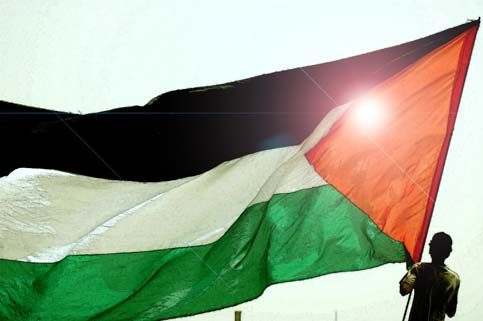
Today- December 27th is the anniversary of the attack by israel on the gaza strip.
The following is a statement from Gisha (legal centre for freedom of movement)
Despite the fact that a year has passed since the start of the Gaza military operation, the damage caused by three weeks of war and the near total closure preceding it has yet to be repaired. The reason: Israel's ongoing policy blocking goods from entering the Gaza Strip, including a near total ban on reconstruction materials.
As an example, part of the report issued today by Gisha:
Funds for Reconstruction:
- Reconstruction funds pledged at the Sharm el-Sheikh Summit: Some $4.5 billion.
- Number of months international community negotiated with Israeli government over mechanism for transferring reconstruction funds and materials: 9 months.
- Implementation of mechanism for transferring reconstruction funds and materials: None.
23 Days of way 928 Days of Closure: Life One Year after Israel’s Latest Offensive on the Gaza Strip, 27 December 2008 – 18 January 2009
Within this report it is reiterated that no action has been taken again Israel since the Goldstone Report has been issued. For over 42 years Israel has acted with impunity to international law. And by our governments remaining impassive, they are intrinsically complicit to the actions of Israel.
Act now:
PCHR stress the urgent need for accountability. All those who violate international law must be investigated, tried and prosecuted in accordance with international standards. Victims’ rights to the equal protection of the law and an effective judicial remedy must be upheld.
sign this petition to Gordon Brown
Saturday, December 5, 2009
COMET Project

The comet project is support by the villages, the inspirational group set up in the Hebron region of the west bank by both Israeli's and Palestinian's.
The project has been entered into the BBC world's competition 'world challenge' which quite ironically is sponsored by shell. The idea of the competition is to champion new innovative projects which have been implemented at a grass roots level.
Two Israeli physicists, Elad Orian and Noam Dotan, are hoping to bring power to the desert by installing wind and solar technologies to help run lights and fridges for these impoverished people.
Further details about the project can be found here
more photos

Thank you to Matthias for setting us up with a group photo stream:
http://www.flickr.com/photos/45114946@N07/
picture above:
the Burin group with Bilal and Ghassan at Bilal's uncles house. This house was built years ago fro Bilal's family, but due to its location on a small hill between the settlements of Itzhar and Baracha each time the family moved in they were evicted by the Israeli Army.
The family still hope to live there at some point in the future.
inshallah.
letter to the Telegraph
Peter has put his pen to paper on behalf of the group once again and submitted the following article to the Telegraph.
Lets hope it gets the same page space as his previous excellent efforts.
(Rev. Canon Dr.) Peter G. Liddell
Lets hope it gets the same page space as his previous excellent efforts.
Fairness in the Land?
I have recently returned from taking part in the olive harvest on the West Bank. In my encounter with the Israeli army, I was told that it was “protecting farmers from settlers.” In reality, this amounted to preventing farmers from picking olives on their own land (by declaring it a “closed military zone”) and failing to prevent settlers from leaving their illegally occupied hill-top to harass the farmers.
The group I was with met the local headmaster, who told us that his greatest concern was the pollution of the water-table by untreated sewage flowing from the settlement.
I have now heard, two weeks after our departure, that settlers have cut down 95 olive trees (Haaretz Nov. 21) and invaded the neighbouring village, where they were escorted by the army, who fired tear gas and live bullets (Palestinian Centre for Human Rights).
Settlers receive inducements from the Israeli government: loans for the purchase of property, price reductions on the leasing of land, financial incentives for teachers, grants for investors and free school transport.
One of the farmers I met showed me his documentation for the land he thought he owned. This included the large part of his grove which he was no longer allowed to access and the hilltop itself, where 20 years ago he and his family used to picnic, and which is now occupied by the same settlement which pours its sewage on to the village water supply.
In view of the unparalleled level of support given to one favoured group of inhabitants of the West Bank, will the State of Israeli be providing compensation to their victims, the Palestinian farmer who has now lost his livelihood, the other who cannot access his own grove and the villagers who habitually suffer amoebic dysentery caused by the polluted water supply?
Yours sincerely,
(Rev. Canon Dr.) Peter G. Liddell
machsom watch
machsom watch are an Israeli organisation run by women.
They call for a stop to the oppression that is destroying both the prospect of a Palestinian state and the future of Israel.
Machsom Watch monitor the human rights abuses at checkpoints, often present with a clipboard, camera and video camera to document what may occur at such points of exchange.
This video shows what one man must go through almost every time he passes a checkpoint, due ot his ID card being 'similar' to a suspected criminal.
A friend of mine from Burin told me that a week ago he had been held Huwara check point- the very same one in this video and the very same one that we passed through on our journeys to and from Nablus. He was detained for many hours until his father was brought to argue for his release.
More videos by machsom watch can be found here.
They include checkpoints, testimonials, tours, demonstrations and an act of arson in the frield of Burin.
They call for a stop to the oppression that is destroying both the prospect of a Palestinian state and the future of Israel.
Machsom Watch monitor the human rights abuses at checkpoints, often present with a clipboard, camera and video camera to document what may occur at such points of exchange.
This video shows what one man must go through almost every time he passes a checkpoint, due ot his ID card being 'similar' to a suspected criminal.
A friend of mine from Burin told me that a week ago he had been held Huwara check point- the very same one in this video and the very same one that we passed through on our journeys to and from Nablus. He was detained for many hours until his father was brought to argue for his release.
More videos by machsom watch can be found here.
They include checkpoints, testimonials, tours, demonstrations and an act of arson in the frield of Burin.
Wednesday, December 2, 2009
bbc
Yesterday there was an article featured on the bbc website.
It told of the problems that the people living in Burin have been encountering with settlers cutting down the trees in the groves closestn to the settlements.
The article describes the loss of trees from a Palestinian farmer in Burin and a Jewish settler in the south of the West Bank.
It is interesting that the bbc is seeming to strive for impartiality in this article as it consistently reassures the everyday news reader.
Yet I find myself wondering if the lives of these two men, considering the stark difference of a west bank settlement and a Palestinian village can really be comparable.
the article can be read here :
Middle east conflict played out in the olive groves
And I will leave you to decide for yourselves.
It told of the problems that the people living in Burin have been encountering with settlers cutting down the trees in the groves closestn to the settlements.
The article describes the loss of trees from a Palestinian farmer in Burin and a Jewish settler in the south of the West Bank.
It is interesting that the bbc is seeming to strive for impartiality in this article as it consistently reassures the everyday news reader.
Yet I find myself wondering if the lives of these two men, considering the stark difference of a west bank settlement and a Palestinian village can really be comparable.
the article can be read here :
Middle east conflict played out in the olive groves
And I will leave you to decide for yourselves.
Wednesday, November 25, 2009
project hope
project hope
During the months of october and november 2009, forty five school drop-outs from Nablus, Westbank, took part into a photography camp. There are some absolutely beautiful pictures on this blog, ranging from intimate portraits to barren landscapes. We had the pleasure of meeting the Montreal photojournalist Valerian Mazataud whilst staying in Madama, learning of project hope and the work he was doing in the Nablus district. his own website: focuszero holds the portfolio named:
check it out
During the months of october and november 2009, forty five school drop-outs from Nablus, Westbank, took part into a photography camp. There are some absolutely beautiful pictures on this blog, ranging from intimate portraits to barren landscapes. We had the pleasure of meeting the Montreal photojournalist Valerian Mazataud whilst staying in Madama, learning of project hope and the work he was doing in the Nablus district. his own website: focuszero holds the portfolio named:
La guerre des oliviers - The Olive War
check it out
Sunday, November 22, 2009
dispatches
The most recent Dispatches goes by the title : Inside Britain's Israel lobby
Dispatches investigates one of the most powerful and influential political lobbies in Britain, which is working in support of the interests of the State of Israel.Despite wielding great influence among the highest realms of British politics and media, little is known about the individuals and groups which collectively are known as the pro-Israel lobby.Political commentator Peter Oborne sets out to establish who they are, how they are funded, how they work and what influence they have, from the key groups to the wealthy individuals who help bankroll the lobbying.He investigates how accountable, transparent and open to scrutiny the lobby is, particularly in regard to its funding and financial support of MP. The pro-Israel lobby aims to shape the debate about Britain's relationship with Israel and future foreign policies relating to it.Oborne examines how the lobby operates from within parliament and the tactics it employs behind the scenes when engaging with print and broadcast media. - blurb
It seems to me that transparancy is a word we are all familiar with but many are not fully aware of its implications. If lobbying the government is not wrong, then why should we not be aware of it. After all these are the men and women who are running our country- a supposed democracy. I would like to influence my government, but at times like these I am convinced that my pockets are not deep enough to satisfy the big men upstairs.
watch it here: Dispatches 4OD
Read the guardians comment is free here: friends in high places
read more about it here: opendemocracy
Michigan Peace team

Whilst in the West Bank, we picked with various international organisations including the International Solidarity Movement and the Michigan Peace Team.
Here is a link to the blog of the MPT:
http://mptinpalestine.blogspot.com/
The have documented very effectively various events that have occured in Burin, the village in which the majority of our olive harvest was conducted this year. They were also a lovely group of people with big smiles and good conversation.
For more information on the work they conducted in and aorund Burina nd the west bank, please view their blog above.
- Tree Planting Protest in Burin
- Burin: Olive Harvesting under Occupation
- Burin Tree Massacre
Wednesday, November 18, 2009
Working Together for Justice & Peace
Earlier this week I attended a talk given by Erella Dunayevsky from Kibbutz Shoval, dialogue facilitator and activist in the Villages Project in the South Hebron hills.
Erella was supposed to be accompanied by Hamed Qawasmeh, a Palestinian humanitarian worker in Hebron, but due to problems with his visa, could not be present for the leg of the talks. Hopefully he will make it to the UK next week and continue with the tour, inshallah.
On hearing that Hamed's visa had first been refused Erella contemplated whether she should take this trip to the uk at all. After all, it was meant as a show of solidarity- A Palestinian and an Israeli working together. But after spending some time thinking about the issue, Erella realised that her relationship with Hamed transcended nationality, it was on a personal level; a friendship. And so she came to the UK alone.
The stories she told rang of hard work, detailed organisation and a high level of dedication and time by those on the ground spearheading the projects. But as she stated- the difference with this group is that the relationship with people comes first and the solutions to defined problems follow later. Many grassroots projects function in the opposite way with bonds with individuals growing from work implemented.
Erella spoke with passion, conviction and on in intimate level through stories and examples which had us laughing along with her smiles and pause in shock at some of the situation described.
As she spoke one story really struck me regarding a walk to school for some young children which was disrupted by settler attacks.
It seemed to be either the short road or the long road.
to fight or to fly...
the villages projects can be found here
Erella was supposed to be accompanied by Hamed Qawasmeh, a Palestinian humanitarian worker in Hebron, but due to problems with his visa, could not be present for the leg of the talks. Hopefully he will make it to the UK next week and continue with the tour, inshallah.
On hearing that Hamed's visa had first been refused Erella contemplated whether she should take this trip to the uk at all. After all, it was meant as a show of solidarity- A Palestinian and an Israeli working together. But after spending some time thinking about the issue, Erella realised that her relationship with Hamed transcended nationality, it was on a personal level; a friendship. And so she came to the UK alone.
The stories she told rang of hard work, detailed organisation and a high level of dedication and time by those on the ground spearheading the projects. But as she stated- the difference with this group is that the relationship with people comes first and the solutions to defined problems follow later. Many grassroots projects function in the opposite way with bonds with individuals growing from work implemented.
Erella spoke with passion, conviction and on in intimate level through stories and examples which had us laughing along with her smiles and pause in shock at some of the situation described.
As she spoke one story really struck me regarding a walk to school for some young children which was disrupted by settler attacks.
It seemed to be either the short road or the long road.
to fight or to fly...
the villages projects can be found here
Subscribe to:
Posts (Atom)